Congo Square
Congo Square
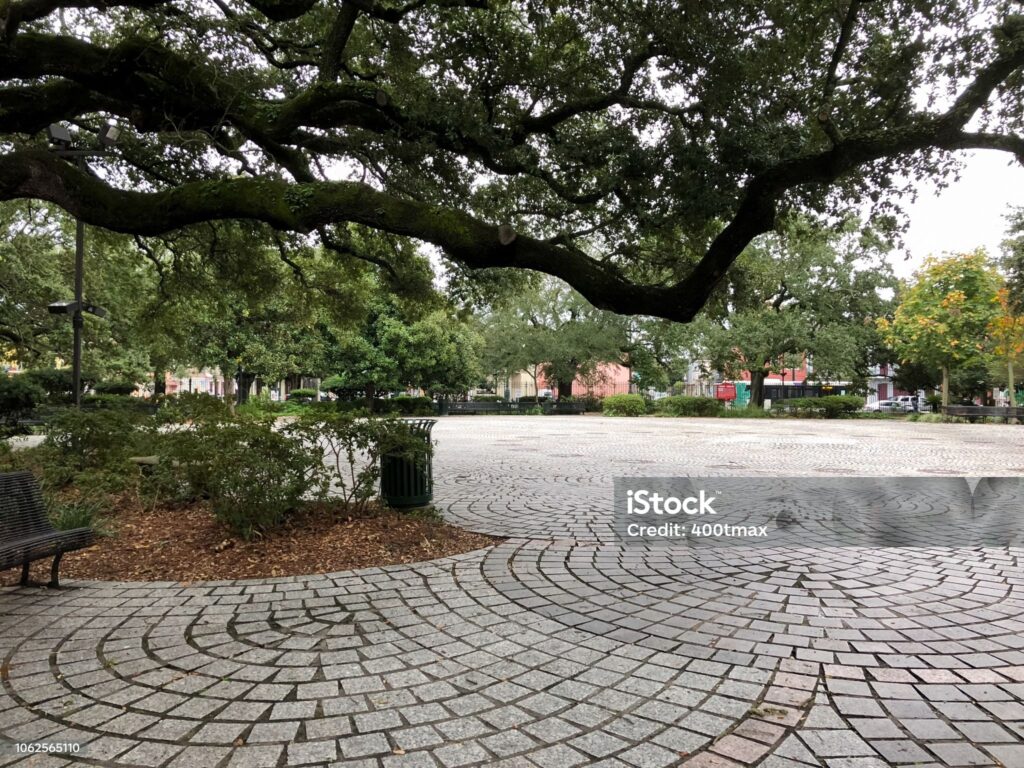
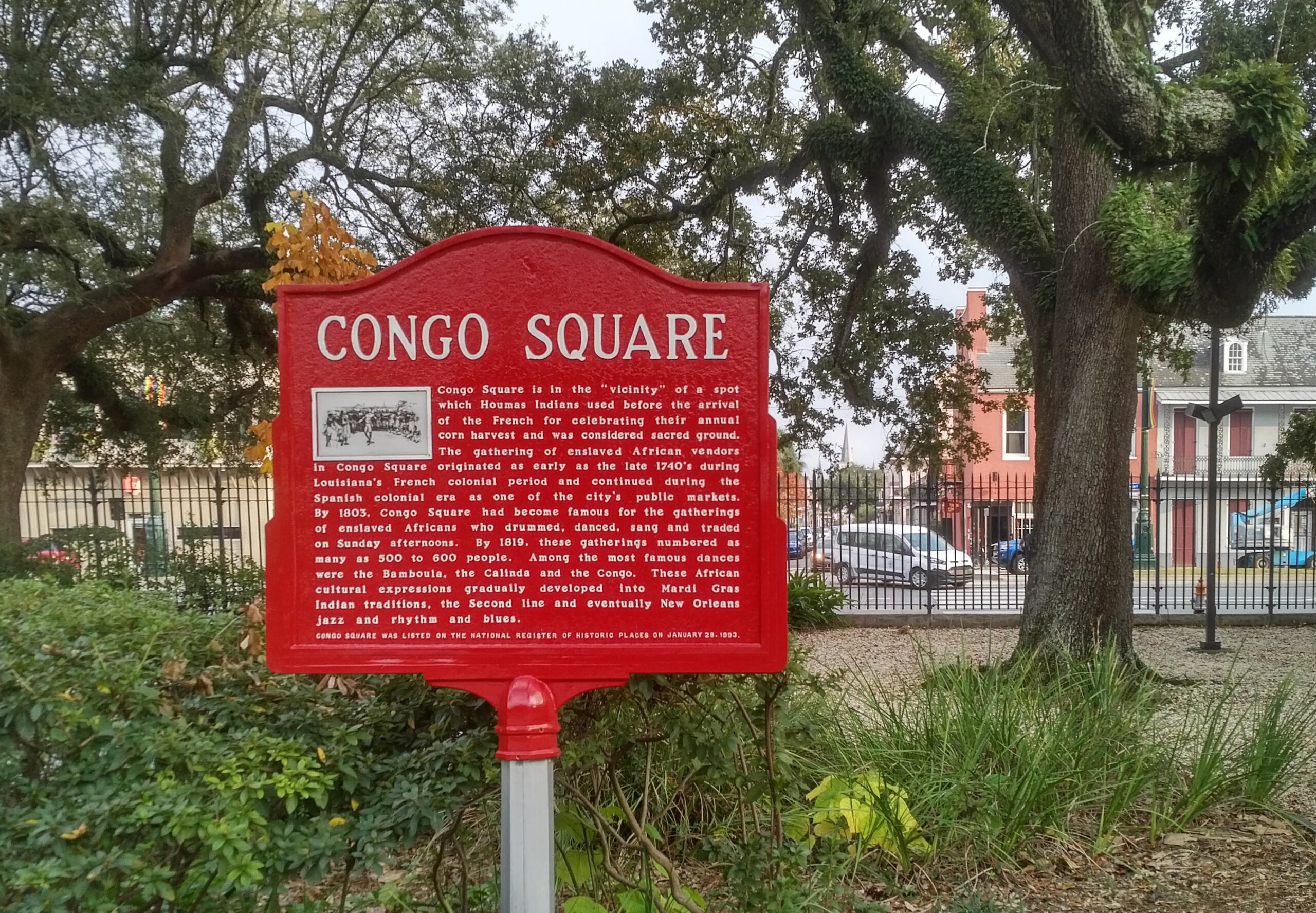
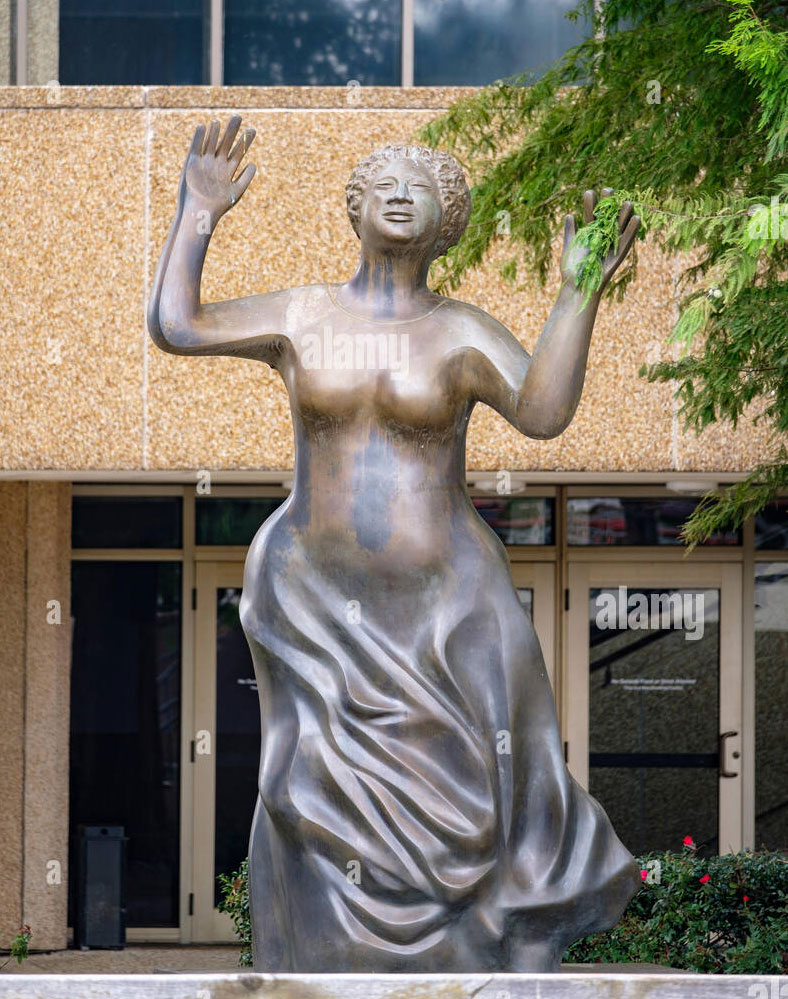
(photo: Southernbelle1628, CC BY-SA 4.0)
Nowhere does the power of New Orleans culture resound more eloquently than at the corner of Rampart and St. Ann streets. There you’ll find the entrance to both Louis Armstrong Park and Congo Square—the modern human, embodiment of the Crescent City’s contribution to world music and culture, side by side with the ancient, terrestrial one. With his trumpet playing, singing and acting Armstrong became one of the most recognizable artists of the 20th century. Congo Square, where Africans played African music, danced African dances and cooked African food throughout much of the American slavery period, was the incubator for African American music and Afro-Creole cuisine. In retrospect it seems only natural that this piece of land be chosen as the place where New Orleans would remember its most important son. But the journey from Congo Square to Armstrong Park encompasses many twists of fate, name changes and heart breaks. And it is a story that is still unfolding. While the name Congo Square is only as old as the African presence in Louisiana, the significance of that piece of ground as a multi-ethnic gathering place extends deep in the annals of Louisiana Native American tradition.
“Before European explorers arrived, the location of Congo Square and its vicinity lay in the proximity of an Indian portage, a transportation route that Native Americans traveled between the Mississippi and Bayou Chopic,” Freddi Williams Evans writes in her book “Congo Square: African Roots in New Orleans.”
“…the Quinipissa, Acolapissa, Ouma (Houma), Chitimachas, Tunicas, and the Bayogoulas among others are known to have, at some point, resided or camped in the area that became New Orleans,” Evans writes. As John McCusker, co-author of the book, Jockomo: the Native Roots of Mardi Gras Indians, said in an interview, “Native Americans called it Balbancha, a place of many languages. It was an indigenous American Babel, if you will. It was multi lingual and multi cultural before the Europeans got here.” From the earliest days of the French colony, Africans, both enslaved and free, gathered in Congo Square to express their culture on Sundays. While similar gatherings did take place in other parts of the city, an 1817 city ordinance forbade such gatherings anywhere but in Congo Square. But Congo Square was always contested ground. Around 1816, the “Congo Circus” performed in the square. Despite its name, the circus apparently had little connection to the African dances in the square and, in fact, black people were not allowed to attend it, notes Jerah Johnson in his book “Congo Square in New Orleans. In its long history, the square has been known by nearly a dozen names— Place des Negres, Place Publique, Place du Cirque, Circus Park, etc. But the name that has endured into modernity is Congo Square.
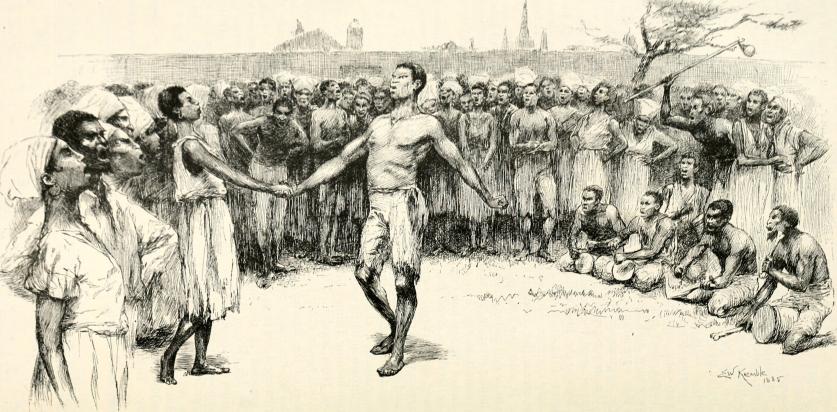
So what happened Sundays in Congo Square? The most famous description was written by Benjamin H. Latrobe, the English born architect whose most famous work includes the design of the United States capital building. Traveling to New Orleans in 1819 he witnessed “5 or 600 persons assembled in an open space or public square, dancing in a series of circular clusters. What he initially took to be the sound of horses trampling on a wooden floor, turned out to be the sound of drumming. Latrobe’s description of ecstatic dancing may well have described a Voodoo or other religious ceremony. By the mid 1800s, as the percentage of New Orleanians born in Africa decreased, observers note that the dances performed in the square became less African and more African American. In addition to his verbal descriptions, Latrobe also drew pictures of the instruments played in Congo Square and thus made it possible to compare those instruments with their parallels in west African nations including Benin, Congo, Cameroon, Nigeria and Ghana. “No other spot has been more often mentioned in scholarly speculation about the origins of jazz or about the relationship of pre-jazz New Orleans music to jazz itself. [U]nlike other fly-by-night kitchens, garages, backyards, barrows, and nightclubs in New Orleans, St. Louis, Kansas city, Chicago and Harlem—the square has had a continuous history, and one that is largely documentable,” Jerah Johnson wrote.
Many scholars, including George Washington Cable and Lafcadio Hearn noted that the songs sung in Congo Square embodied an amalgam of languages including remnants of African languages, Louisiana Creole, French and English. After the American purchase of Louisiana in 1803, the influx of English-speaking people of African descent resulted in an increase in English language songs.
Congo Square served as a center of New Orleans cultural and civic life for reasons that go beyond its role as a place of song and dance. The square was also a market place, where people of African descent sold foodstuffs and other wares. Then, as now, the square has been important politically as well.
During the slavery period, Congo Square was the place where many public executions took place. In an eerie echo of that slavery-era history, in 1891, 11 Sicilian immigrants were lynched in the square, after some of them had been found not guilty of murdering the New Orleans police chief. With chants of “Yes! Yes, hang the dagoes!” a mob took the men and hanged them in what has been called the largest mass lynching in American history.
Congo Square also was the approximate location of an 1867 demonstration by African American citizens aimed at desegregating the city’s streetcars. It was the place where the Emancipation Proclamation was celebrated and President Abraham Lincoln’s death was mourned. It was the place of political rallies and union meetings. The city’s annual Martin Luther King, Jr. commemoration usually culminates in Congo Square.
Despite the square’s enduring significance to black New Orleanians, the city’s political leadership has often sought to create a wedge between the black community and its beloved square. In the 1850s, as in recent times, there was talk of moving City Hall into the square. In 1859, The Times-Picayune published an article noting that some German-descended New Orleanians proposed renaming the square to honor Alexander von Humboldt, the German explorer who died that year. “[W]e hope the Council will take favorable action in the matter. Certain[ly] Humboldt is preferred to Congo,” the newspaper opined. That name change was never made official. Once Place d’Armes was renamed to honor the former president and architect of the genocidal Trail of Tears, Congo Square was renamed Place d’Armes.
In perhaps the gravest insult, in 1893, the New Orleans city council officially changed the name of the square to Beauregard Square in honor of a Confederate general. That was the name it still bore when the first Louisiana Jazz and Heritage Festival took place there in 1970.
Congo Square was so important as a symbol and embodiment of African culture presence in Louisiana that local newspapers made it the frequent target of snide and derogatory comments.
The Sunday Delta of November 30, 1862 wrote, Time was when the best opportunity to see the Ethiopian-the genuine Negro-fresh and fragrant from the spicy coast of Senegambia-was on Congo Square, on any summer Sunday afternoon, when he congregated in huge numbers, to indulge in the pastimes of dancing and in playing the banjo and bones. But that time is passed. Congo Square is converted into the Place d’Armes, and Sambo is driven out of this his terrestrial paradise, to seek recreation in less loved localities. We believe he now has no place of general and promiscuous resort, but is driven to congregating in small squads in cabarets or out-of- the-way places, where, instead of exercising his crualities in the mazy figures of the dance, he addicts himself to cards, dominoes, or to the more hurtful practice of wetting his throat to keep his body from rusting.
Congo Square has been the site of more than one great concert hall, two of which are still extant. The Globe Ball Room opened in 1851 on the corner of St. Claude (now Henriette DeLille) and St. Peter streets, and boasted a wide variety of performances including operas and other western classical performances. By 1890, once the Globe had fallen into disrepair, “a new, three-story brick building identified by the city as a “Negro dance hall”–Globe Hall–stood on this spot,” Jordan Hirsch wrote on the “A Closer Walk” historical website. Charles “Buddy” Bolden, the seminal trumpet player, played there regularly as did other early jazz musicians such as trombonist Edward “Kidd” Ory and clarinetist Johnny Dodds. In 1918, the structure burned down. It was replaced in the late 1920 with the Municipal Auditorium (which was renamed the Morris F.X. Jeff Municipal Auditorium in 1994.) That facility, which opened in January of 1930 was conceived at least in part as a replacement for the French Opera House at the corner of Bourbon and Toulouse streets. It was destroyed by a fire in 1919. The auditorium, an impressive five-story, Italian Renaissance-style, 75,000 square foot, limestone structure opened in January of 1930 with a performance by the legendary blackface entertainer Al Jolson.
In 1973, the Theater for Performing Arts opened in Congo Square, providing a 2,100 seat venue for the New Orleans Ballet Association and the New Orleans Opera Association. In 1995, the theater was renamed the Mahalia Jackson Theater for Performing Arts to honor the gospel legend who was born in 1911 in a section of uptown New Orleans long known colloquially as Niggertown.